Oil and Gas Training Online – Reaching Crews Who Work Everywhere
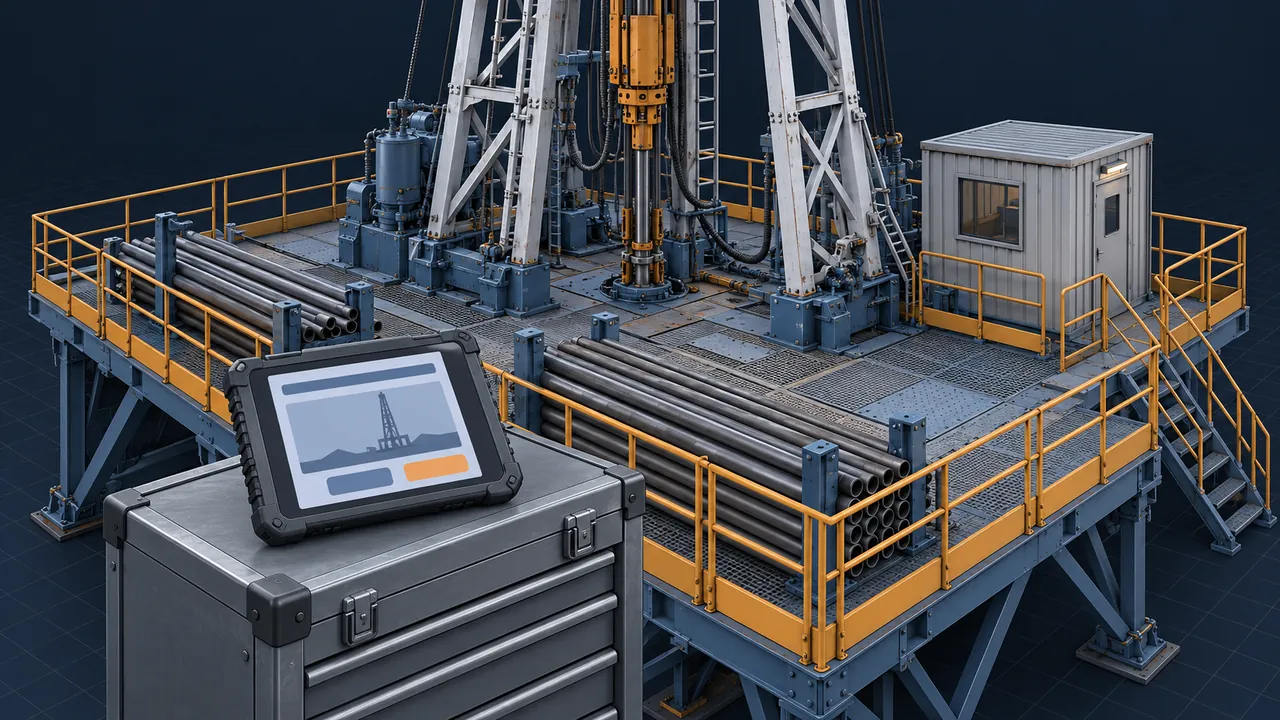
Picture the people you need to train: a floorhand two weeks into a hitch on a land rig, a pumper driving a hundred miles of lease roads, and a technician on an offshore platform with shared internet. Add a contractor crew that works for three operators in a year. None of them are sitting at a desk, and few of them will ever see the inside of your training room. How do you deliver oil and gas training online that actually reaches crews who work everywhere?
Effective online oil and gas training is built for the field first: courses that work offline or on weak connections, run on rugged tablets and phones, come in short modules that fit around rotations and shifts, and keep records your safety team can pull up in an audit. Online delivery handles knowledge well, such as hazard awareness, procedures, regulations and refreshers. Hands-on skills and accredited programs still need in-person or supervised components, so the strongest programs are blended. Design for gloves, noise, glare and spotty signal from day one, and crews will use the training. Design for an office desktop and they won't.
What Makes Oil and Gas Training So Hard to Deliver?
The nature of the work itself creates the challenge. Crews rotate on and off, often on long hitches, sites are remote, connectivity is limited and the workforce includes employees, contractors and subcontractors from many companies. The jobs are hazardous, so training isn't optional, and much of it is tied to regulations and operator requirements.
Classroom training struggles with all of that. Pulling a crew off a rig for a day costs production and travel. Scheduling around rotations is a puzzle, so by the time a class is organized, half the people who needed it have moved to another site.
Online training solves part of the problem by bringing the content to the crew, but it only works if it was built for the places crews spend their days. If it doesn't work on a tablet in a truck, it doesn't work.
What Can Go Online, and What Can't?
A lot can go online, although not everything should.
| Training type | Online fit | Notes |
|---|---|---|
| Hazard awareness and orientation | Strong | Ideal for consistent messaging across sites and contractors |
| Procedures and SOP refreshers | Strong | Short modules plus job aids crews can pull up later |
| Regulatory and company policy | Strong | Easy to track; keep it short and relevant to the job |
| Equipment familiarization | Good | 3D models and video help, followed by on-site walkdowns |
| Emergency response and well control | Partial | Knowledge online; drills, simulators and assessments in person |
| Hands-on skills (rigging, PPE fit, tools) | Limited | Online prep, then a supervised practical sign-off |
Online prep before hands-on training is one of the best uses of the format. When crews arrive at a practical session already knowing the steps and the reasons, trainers spend their time on practice and coaching instead of lecture.
Online training also helps before a new hire ever reaches location. A short set of modules on site rules, basic hazards, PPE expectations and what the first day looks like can be completed at home. As a result, new hands arrive less overwhelmed and the crew spends less of the first hitch explaining the basics. Keep these modules short and welcoming, because the point is to reduce first-day nerves, not to bury someone in policy before they start.
Designing Oil and Gas Training for the Field
Plan for Weak or No Connectivity
Assume the signal will be poor. Keep file sizes small, compress video, avoid streaming where you can and choose an LMS or app built for offline eLearning, so learners can download courses and sync their progress when they reconnect. Test the course on the slowest connection your crews actually have, not on headquarters Wi-Fi.
Design for Gloves, Glare and Noise
Big buttons, high-contrast colors and large text help on a tablet outdoors or in the doghouse, the small shelter on the rig floor, where the lighting is often poor. Captions are essential, because crews often can't hear narration over generators and equipment. Avoid tiny drag-and-drop targets that are hard to hit with work gloves or a cracked screen protector.
Keep Modules Short
Five to fifteen minutes per module fits a break, a shift change or the start of a safety meeting. Let people stop and resume without losing progress, since a long course people can't finish on a hitch tends to get rushed at the end.
Show the Real Equipment
Crews spot generic stock photos immediately, and they lose trust in training that doesn't look like their site. Use photos, video or 3D models of the actual equipment and locations, with permission and with anything sensitive removed.
Speak the Crew's Language
Use the terminology people use on location, explain it for new hands and plan for translation if your workforce needs it, because plain, direct writing respects people's time.
What Changes Offshore?
The basics are the same, but the limits are tighter. Bandwidth on an offshore installation is shared with operations, communications and everyone's evening calls home, so large downloads may be restricted or slow. Downloading courses before a hitch, or loading them onto devices that stay on the installation, avoids fighting for bandwidth.
Time is structured differently too. Offshore crews often have predictable downtime between shifts, which can be a good window for training if the courses are ready and the devices are available. A few shared tablets in a quiet area, preloaded and charged, can work better than asking people to use personal phones.
Check what devices are allowed in which areas. Hazardous-area rules may restrict ordinary electronics in parts of the installation, so decide in advance where training will happen. The same rule applies on land, around the wellhead and other classified areas: any tablet used there must carry the right hazardous-location rating, and an ordinary rugged case doesn't count. Most of the time it is simpler to do training in the living quarters, the change house or the truck.
Where Do Accredited Programs Fit?
Alongside your own training, not in place of it. Industry programs set common baselines that operators often require. The International Association of Drilling Contractors (IADC), for example, accredits RigPass, a safety orientation for new rig workers, and well control programs under its WellSharp standards. These programs are delivered through accredited providers under IADC's rules, and delivery formats are set by those programs.

Your own online training fills in what accredited programs don't cover: site-specific hazards, your company's procedures, equipment you run and lessons from your own operations. Make it clear to crews which training is which, and keep the records separate.
For the regulatory picture, OSHA's oil and gas extraction safety and health page outlines common hazards in the industry and links to the standards that apply, which is a useful checklist when you map what your training must cover.
How Do You Keep Records Straight Across Contractors?
Carefully, because auditors and operators will ask. When several companies share a site, you need to know who completed what, when and in which version of the course.
- Give every course a clear version number and keep old versions on record.
- Record the learner's employer, not just their name, so contractor records are easy to separate.
- Set expiration and refresher dates where training must be repeated.
- Make it easy for supervisors to check a crew member's status from the field, ideally on a phone.
- Export records in a format operators and prequalification systems accept.
Records that only live on one office computer are a risk in a business where people move between sites every few weeks. Cloud-based records that sync from the field are much easier to defend.
How Do You Know It's Working?
Completion rates tell you the training was finished, not that it changed anything. Look at signals closer to the work:
- Ask supervisors whether new hands show up knowing the basics the training covers.
- Review quiz items most people miss. They point to confusing content or a real knowledge gap on site.
- Watch the incidents and near misses the training was meant to reduce, over months rather than weeks.
- Collect short comments from crews. One line typed on a phone after a module often holds the most practical feedback you'll get.
Start small by piloting one module with one crew, correcting what they flag and then rolling it out. Field crews are honest reviewers, and they'll tell you quickly if something doesn't fit how the work is done.
How Do You Keep Crews Engaged?
Respect their time and their experience, because experienced hands tune out training that talks down to them or repeats what they already know. Use real scenarios: a near miss, a decision under pressure, a job that went sideways. Let experienced workers test out of basics where your rules allow it.
Much of oil and gas training is compliance-driven, and compliance courses have a reputation for being dull, but they don't have to be. Our guide to engaging compliance training covers practical ways to make required training something people pay attention to.
Supervisors are the multiplier. When a tool pusher or site supervisor brings up a training scenario in the morning safety meeting, the course stops being a box to check and becomes part of how the crew works.
Build It for the Doghouse, Not the Boardroom
Online oil and gas training works when it is built for the field: offline-ready, readable outdoors, captioned, short enough to finish on a break and tracked in records that follow people from site to site. Use it for knowledge and refreshers, pair it with hands-on sign-offs for physical skills and keep accredited programs on their own track.
Before you build or buy anything, take one existing course out to a real location. Load it on a tablet, put on gloves and try it in the noise with whatever signal you can get. What you learn in that half hour will shape every design decision that follows. My 400+ courses include training for energy companies, and I'm happy to help you turn what you learn in the field into a course your crews will actually use.