What Is Instructional Engineering? – Design Meets Engineering
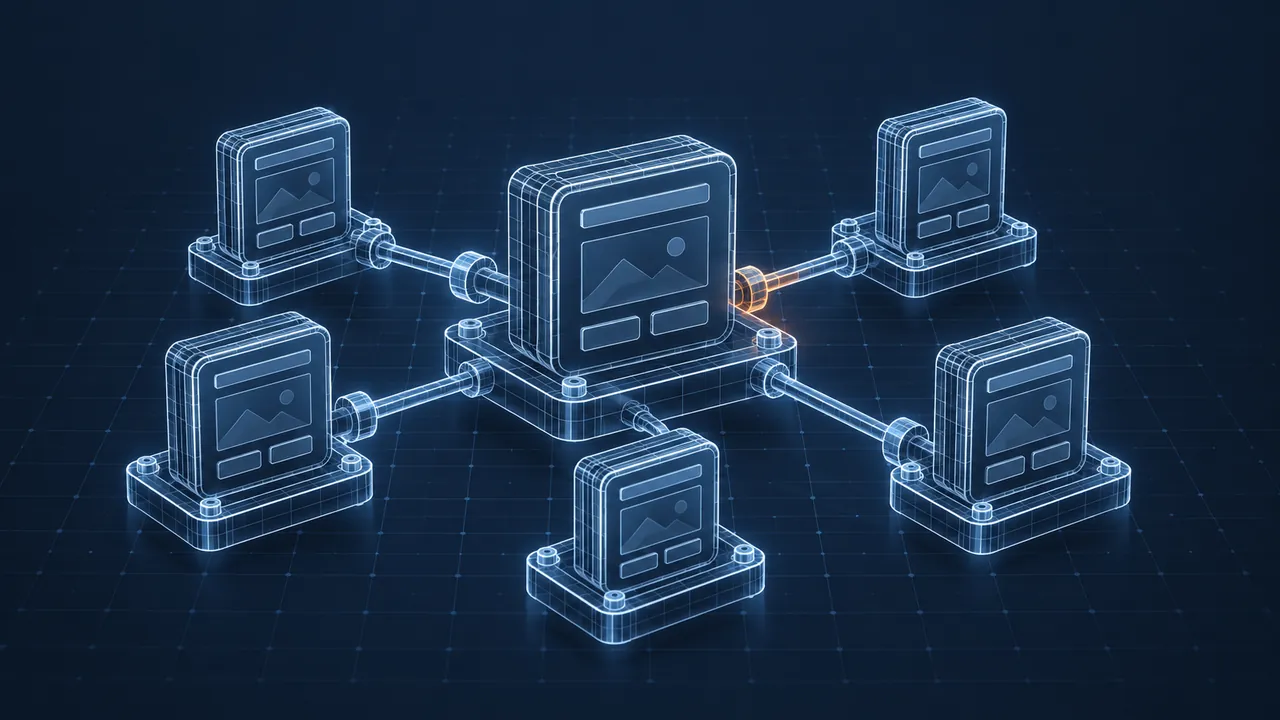
Most training teams can tell you how many people finished a course. Far fewer can tell you whether it changed anything on the job, or why it didn't. Most of us learned the craft by doing it: write objectives, draft a storyboard, build the course and hope it lands. Sometimes the result looks polished and nothing changes, and nobody can explain the miss. That gap is where instructional engineering comes in. So what is instructional engineering, and how is it different from the instructional design you already practice?
Instructional engineering is the practice of designing learning the way engineers design systems: starting from measurable requirements, applying proven principles from the learning sciences, building to a specification, testing against real performance data and improving in planned cycles. It does not replace instructional design. It adds the discipline engineers bring to any complex build, such as clear requirements, documented decisions, controlled iteration and evidence that the thing works. The term overlaps heavily with "learning engineering," a related field that applies the learning sciences with human-centered engineering methods and data. In practice, instructional engineering is instructional design that can show its work.
What Is Instructional Engineering, in Plain Terms?
Instructional engineering treats a course as a system with inputs, processes and outputs that can be specified, built, tested and tuned. The inputs are the learners, the job context and the business problem. The processes are the instructional strategies you choose. The output is a change in what people can do, measured as directly as you can manage.
The word "engineering" can sound cold, so let me be precise about what it means here. Engineering is not about gears or code. It is a habit of mind. Engineers ask what the system must do, how they will know it does it, what constraints they are working within, and what evidence would tell them to change course. Those questions transfer neatly to learning.
A designer working this way still cares about tone, story, visuals and the learner's experience. The difference is that every one of those choices traces back to a requirement and gets checked against a result.
Where Did the Idea of Instructional Engineering Come From?
The idea has several roots, and it helps to know them because each one shaped how the term is used today.
- Herbert Simon's "learning engineers." The economist and cognitive scientist Herbert Simon argued in the late 1960s that universities needed professionals who understood how learning works and could design for it deliberately. His phrase is often cited as the origin of learning engineering.
- Military and industrial training systems. After World War II, large training organizations needed repeatable ways to produce competent people at scale. That pressure produced the systems approach to training, which later became formal instructional systems design.
- Performance engineering. Thomas Gilbert's 1978 book Human Competence: Engineering Worthy Performance framed workplace performance as something you could analyze and engineer, not just teach.
- The academic term itself. Canadian researcher Gilbert Paquette and colleagues developed a method they called instructional engineering for designing networked learning environments, and wrote about it in the early 2000s.
- Learning engineering today. IEEE's Industry Consortium on Learning Engineering (ICICLE) has worked to define learning engineering as a practice that applies the learning sciences through human-centered engineering design and data-informed decisions.
Put together, these threads describe the same move: taking what we know about how people learn and applying it with the rigor we expect from any other engineered product.
How Is Instructional Engineering Different from Instructional Design?
The honest answer is that the difference is one of emphasis, not kind. Good instructional design already uses analysis, objectives and evaluation. Instructional engineering makes those steps non-negotiable and measurable, and it treats the course as something that will be revised based on evidence rather than shipped and forgotten.
| Question | Typical instructional design practice | Instructional engineering practice |
|---|---|---|
| Where does the project start? | A content request or topic list | A performance requirement with a measure attached |
| How are strategies chosen? | Experience, templates, stakeholder taste | Learning-science principles matched to the task type |
| What gets documented? | The storyboard and final files | Requirements, design decisions, rationale and test results |
| How is success judged? | Completion rates and smile sheets | Changes in observable performance, plus learning data |
| What happens after launch? | Updates when something breaks | Planned review cycles driven by data |
Plenty of excellent designers already work in the right-hand column. The label simply names the discipline so teams can hold each other to it.
What Does "Engineering" Actually Add to Course Design?
It adds five specific habits. Each one is ordinary in engineering and still surprisingly rare in training projects.
Requirements Before Content
An engineer would never start building a bridge before knowing the load it must carry. In the same way, an instructional engineer defines the target performance first: what people must do, under what conditions, to what standard. Content gets selected because a requirement needs it, not because a subject matter expert (SME) thinks it is interesting.
Systems Thinking
A course sits inside a larger system of managers, tools, incentives and job aids. If the real cause of a problem is a confusing form or a missing tool, no amount of training will fix it. Systems thinking means checking the whole environment before assuming instruction is the answer.
Principles as Design Rules
The learning sciences give us fairly reliable rules: spacing practice beats cramming, retrieval practice beats rereading, and unnecessary on-screen clutter hurts learning. Instructional engineering treats these findings the way a structural engineer treats material tolerances. You can choose to break a rule, but you document why. In my experience this is the hardest habit to build, because quietly ignoring a principle costs nothing on the day you do it.
Testing With Real Users
Engineers prototype and test before full production. For courses, that means putting a rough version in front of real learners early, watching where they struggle and fixing the design while changes are still cheap.
Measurement and Iteration
After launch, the course produces data: assessment results, time on task, error patterns, and ideally job metrics. An engineered course has a plan for reading that data and a schedule for acting on it.
How Do Instructional Engineering, Learning Engineering and ISD Fit Together?
Think of them as three overlapping circles with different centers of gravity. Instructional systems design (ISD) is the established process framework: a structured sequence of analysis, design, development, implementation and evaluation that grew out of military and industrial training. It answers the question "what steps do we follow?"
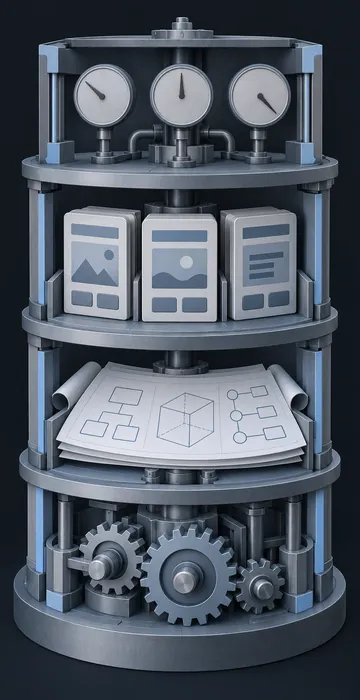
Learning engineering comes more from academic research and educational technology. It emphasizes the learning sciences, data from digital learning platforms and continuous improvement, often at the scale of whole programs or platforms.
Instructional engineering sits between them. It borrows ISD's process and learning engineering's evidence base, then applies both to the practical work of building courses for organizations. If ISD is the blueprint method, instructional engineering is the way a careful builder uses that blueprint, tests the result and tightens the tolerances over time. For a broader overview of how these traditions developed, the history of instructional design is a useful starting point.
What Does an Instructional Engineering Project Look Like in Practice?
Here is a simplified walkthrough. Say a company wants to reduce errors when customer service staff process returns.
- Define the requirement. The team agrees on a measurable target, such as fewer returns processed with the wrong reason code, tracked in the existing system.
- Analyze the system. Interviews and observation show that some errors come from a confusing drop-down menu. That part gets fixed in the software, not in a course.
- Specify the instruction. For the errors that are skill-based, the team writes performance objectives and picks strategies that fit decision-making tasks, such as short scenarios with feedback.
- Prototype and test. A rough version goes to a handful of real staff. The team watches where they hesitate and revises.
- Build to the spec. The final course follows documented standards for media, accessibility, tracking and assessment.
- Measure and adjust. After launch, the team compares error rates before and after, reviews assessment item data and schedules a revision cycle.
Notice that step two removed part of the problem without any training at all. That outcome is common, and it is one of the best arguments for working this way.
What Are the Common Misconceptions About Instructional Engineering?
A few myths come up often enough to address directly.
"It makes learning mechanical." It doesn't have to. Engineering sets constraints and checks results, and creative choices still happen inside those constraints. Some of the most engaging scenario-based courses are also the most carefully specified.
"It requires heavy technology." Not really. A spreadsheet of requirements, a review checklist and an honest look at job data are enough to start. Sophisticated analytics help, but the mindset matters more than the tools.
"It's only for huge programs." Small projects benefit too, often more, because a small team cannot afford to rebuild a course that missed the mark. A one-page requirements document can save weeks.
"Evaluation is the last step." In an engineered approach, you decide how you will measure success in the first meeting. If you wait until the end, you usually discover the data you needed was never collected.
Why Instructional Engineering Is Design That Can Prove It Works
So, what is instructional engineering? It is instructional design practiced with an engineer's discipline: clear requirements, principles drawn from learning research, systems thinking, early testing and planned improvement based on evidence. It connects the structured process of ISD with the research focus of learning engineering, and it keeps the learner's real job performance at the center.
Why bother? Training is expensive, and people's time is the most expensive part. A method that checks whether the time was well spent is worth adopting.
Here is where I would begin. Before anyone gathers content for the next request, write two sentences: what people should do differently, and what evidence will show it. Those two sentences are the first piece of instructional engineering, and every later design decision becomes easier to defend once they exist.