What Is an AI Tutor? – Conversational Coaching for Employees
Picture a new account manager halfway through a pricing course at 9 p.m., stuck on a discount rule that doesn't quite make sense. The trainer is offline and the course just repeats the same slide, so the learner guesses, clicks next and carries the confusion into a real customer call. What if that learner could ask a patient coach right there, one that answers with a good question instead of just the answer? That's the promise of an AI tutor. What exactly is an AI tutor, and how does it coach employees?
An AI tutor is a conversational assistant built into or alongside a course that helps each learner understand material through dialogue, using questions, hints, examples and feedback instead of simply handing over answers. It's usually powered by a large language model and grounded in your course content, so its explanations match what your organization actually teaches. A good AI tutor works the way a skilled coach does: it asks what the learner thinks, spots the misunderstanding and guides them to the right idea. For employees, that means help at the moment of confusion, at any hour, without waiting for a trainer.
How Is an AI Tutor Different from a Chatbot?
An AI tutor is different from a general chatbot because its goal is learning, not just answering. A chatbot tries to give you the information you asked for as quickly as possible, while a tutor tries to make sure you can reach that information yourself next time.
That difference shows up in behavior. Ask a chatbot, "What's the maximum discount I can give?" and it tells you. Ask a well-designed tutor and it might reply, "Let's work it out. What do you remember about how contract length affects the discount?" before guiding you through the rule step by step.
A tutor is also scoped, meaning it's tied to a specific course or topic, grounded in approved content and given instructions about tone, level and boundaries. A general assistant knows a little about everything, whereas a tutor knows your material and stays in its lane.
Why Do Tutors Matter So Much for Learning?
Tutors matter because one-on-one guidance is one of the most effective forms of teaching we know about. In his widely cited 1984 "2 Sigma Problem" paper, educational researcher Benjamin Bloom reported that students who received one-on-one tutoring performed about two standard deviations better than students taught in a conventional classroom. The problem, as Bloom framed it, was that personal tutors for everyone are far too expensive.
Researchers have chased that problem for decades. Intelligent tutoring systems date back to the 1970s and 1980s, using rules and learner models to give step-by-step feedback in subjects like math and programming. They worked well in narrow domains but were expensive to build for each new topic.
Large language models change the economics. A modern AI tutor can hold a natural conversation about almost any topic you ground it in, which makes tutoring practical for workplace subjects that were never worth a custom-built system.
What Does Socratic Coaching Look Like Inside a Course?
Socratic coaching means the tutor responds to a question with guided questions that lead the learner to the answer. It feels slower in the moment, but it builds understanding that sticks.
Here's an example of how it can sound in a safety course. The learner types, "Why do I need to verify zero energy if I already locked out the switch?" A Socratic tutor might respond, "Good question. What could still be holding energy in the system after the switch is off?" When the learner suggests stored pressure, the tutor follows up: "Exactly. Where might that be on the machine you work with, and how would you check it?"
In three exchanges the learner has reasoned through the purpose of the step instead of memorizing it. That's what a good human trainer does, and it's exactly what you want an AI tutor to do. Khan Academy's Khanmigo is a well-known example of this approach in education, designed to guide students toward answers rather than give them away.
Good tutors also know when to stop asking. If a learner is frustrated or simply needs a fact, like a phone number for the safety office, the tutor should just provide it, and you can set that balance in the tutor's instructions.
Where Can an AI Tutor Help Employees Most?
An AI tutor helps most where learners hit confusion alone and where understanding the "why" changes behavior on the job. Some strong fits:
- Complex procedures, where learners need to understand the reason behind each step.
- Product and pricing training, with its many rules and exceptions.
- Software onboarding, where learners get stuck on specific screens and workflows.
- Compliance topics, where scenarios raise "what if" questions the course doesn't cover.
- Technical certifications, where practice problems benefit from step-by-step hints.
- Manager development, where a tutor can help someone think through how a principle applies to their team.
Tutors also help with pacing. A learner who already understands can move quickly, while someone who's struggling can get more explanation without slowing anyone else down. If personalizing the path itself interests you, our guide to adaptive learning AI explains how systems adjust what each learner sees next.
How Do You Set Up an AI Tutor for a Course?
Set up an AI tutor by defining its job, grounding it in approved content, writing clear instructions and testing it with real learners before launch. Many platforms now offer built-in tutor features, and some teams build their own on a business AI plan.
- Define the scope. Which course, which topics and which questions should it handle? What should it refuse or redirect?
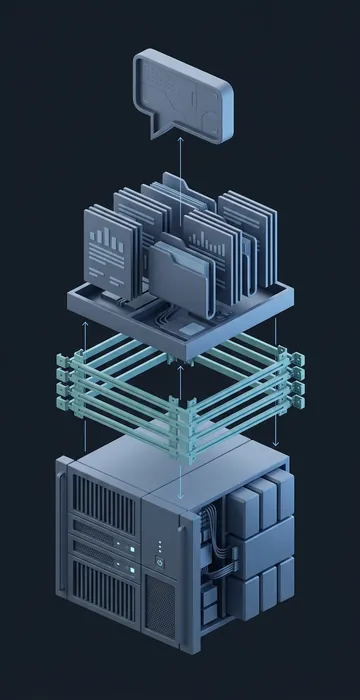
- Ground it in your content. Connect the tutor to the course materials, job aids and policies it should draw from, so its answers match what you teach.
- Write the tutor's instructions. Describe its role, tone, reading level and teaching style, including when to ask questions and when to simply answer.
- Set guardrails. Tell it to say "I'm not sure, please check with your supervisor" when a question falls outside its material, and to never guess about safety, legal or HR matters.
- Test with sample learners. Have a few people try to confuse it, trip it up and ask off-topic questions. Fix what breaks.
- Review conversations after launch. Look at anonymized logs for wrong answers, common confusions and gaps in the course itself.
Reading those logs brings a bonus most teams don't expect. The questions learners ask a tutor show you exactly where the course is unclear, which is valuable feedback for your next revision.
Where AI still needs you: deciding what the tutor should and shouldn't answer, and reviewing what it actually says. A tutor is only as trustworthy as its content and its testing.
How Do You Know If an AI Tutor Is Working?
You know an AI tutor is working when learners use it, its answers hold up under review, and performance on the course's practice and assessments improves. Usage alone isn't enough, because a tutor that receives many questions and gives shaky answers is worse than no tutor.
A simple measurement plan might track:
- Accuracy. Each week, sample a set of conversations and have an SME rate whether the answers were correct and on-policy.
- Helpfulness. Add a quick thumbs-up or thumbs-down after each exchange, and read the comments on the thumbs-down ones.
- Learning results. Compare scores on scenario questions for learners who used the tutor with those who didn't, keeping in mind that motivated learners may use it more.
- Course gaps. Group the most common questions by topic. If one screen generates dozens of questions, rewrite the screen.
Share what you find with stakeholders in plain terms: what learners asked, what the tutor got right, what you fixed. That kind of report builds confidence in the tool and makes the case for extending it to the next course.
What Are the Limits of an AI Tutor?
An AI tutor has real limits, and naming them up front helps you design around them. It can still make mistakes, especially on questions its source material doesn't cover, and it doesn't know a learner's job context unless the learner explains it. It also can't replace the relationship with a manager or mentor who knows the person and their goals.
Privacy needs attention too, since learners should know what happens to their conversations, who can see them and how long they're kept. Use approved tools with clear data settings, and tell learners plainly how the tutor works, because trust grows when people understand the system they're talking to.
An AI Tutor Is Only as Good as Its Design
An AI tutor is a conversational coach that helps employees understand course material through guided questions, hints and feedback, at the moment they need it. It brings some of the power of one-on-one tutoring to self-paced training, which used to be out of reach for most organizations.
The results depend on design. Ground the tutor in your content, write clear instructions, set honest guardrails and test it with real people. Then read the conversations, because they'll tell you where both the tutor and the course can improve. A good place to begin is the course that sends the most "quick question" emails to your trainers, since that's where a patient coach will prove its value fastest.