Can Learners Cheat with AI? – Protecting Assessment Integrity
A manager forwards you a screenshot. One of their new hires pasted your final quiz into a chatbot and got every answer right in under a minute. The course reports a perfect score, yet the new hire can't do the task the course was built for. Now leadership is asking whether any of your scores mean anything. Can learners cheat with AI, and how do you protect assessment integrity?
Yes, learners can use AI to answer many traditional eLearning questions, especially multiple-choice and short-answer items that test recall of facts found in the course. The fix for AI cheating on assessments isn't a better detector. It's better assessment design. Questions that ask learners to apply knowledge to a specific scenario, perform a task, make a judgment call in a simulation or explain their reasoning out loud are much harder to outsource and much better at proving skill. Pair that with clear rules about when AI help is allowed, and use AI yourself to build richer, more varied assessments.
Which Assessments Are Most Exposed to AI Cheating?
The assessments most exposed to AI cheating are the ones that test whether someone can find or repeat information. That's a lot of corporate eLearning, frankly, and it was a weak spot long before AI showed up.
| Assessment type | Exposure to AI help | Why |
|---|---|---|
| Recall multiple-choice | High | Answers depend on facts a chatbot can find or infer |
| Short written answers | High | Language models write fluent answers on most topics |
| Scenario questions using your own policies | Medium | Requires context the chatbot may not have |
| Software or equipment simulations | Low | The learner has to perform the steps |
| Observed practice or live role-play | Low | Performance happens in front of an assessor |
Notice what the low-exposure items have in common: they measure doing, not knowing, which is exactly what most training is supposed to change in the first place.
Do AI Detectors Solve the Problem?
No, AI detectors don't solve the problem, and relying on them can cause harm. Detection tools produce false positives, which means honest learners can be accused of cheating, and they also miss AI-written text that's been lightly edited.
Even OpenAI, the company behind ChatGPT, has said this plainly. Its guidance for educators explains that AI content detectors are not reliable enough to be used as proof. In a workplace setting, where a false accusation can affect someone's job, that's a strong reason to look elsewhere.
A better question than "Did they use AI?" is "Did they show the skill?" Design for that, and detection becomes far less important.
How Do You Design Assessments That Resist AI Cheating?
You design assessments that resist AI cheating by tying every question to performance in a specific context. The more a question depends on the learner's own judgment, actions or situation, the less useful a chatbot becomes.
Ask for Application, Not Recall
Replace "What is the maximum discount a rep can approve?" with a short case: a customer, a request, a few details, and four possible responses that all sound plausible. The learner has to weigh the situation, and although AI can still help reason through it, the item now tests judgment rather than lookup, and well-written distractors make guessing harder.
Use Your Own Context
Build scenarios around your products, your systems and your procedures. General-purpose AI tools don't know your internal escalation path or the quirks of your order screen, so they can't easily answer questions about them.
Assess Performance Directly
For skills that matter most, have learners perform the task. Software simulations, branching scenarios, uploaded work samples and supervisor sign-offs all measure real ability, and a short observed check by a manager is still one of the most reliable assessments ever invented.
Ask Learners to Explain Their Reasoning
A brief recorded explanation, a live conversation or a follow-up question like "What would you do if the customer refused?" reveals understanding quickly, because it's difficult to fake reasoning in real time.
How Can AI Help Protect Assessment Integrity?
AI can help protect assessment integrity by making it practical to build the kinds of assessments that are hard to cheat on. That's the encouraging part of this story: the same tools that create the problem also make the solution affordable.
- Scenario generation. Tools like ChatGPT, Claude or Microsoft Copilot can draft dozens of realistic case variations from one approved scenario, so every learner sees a different version.
- Large item banks. Randomizing from a big pool of questions reduces answer sharing. AI makes writing a big pool much faster.
- Role-play practice. AI-driven conversation tools let learners practice and be assessed on realistic customer or coaching conversations.
- Rubric drafting. AI can draft scoring rubrics for written or recorded responses, giving assessors a consistent starting point.
- First-pass scoring support. AI can flag responses for a human assessor to review, speeding up grading of open answers.
In every case, a subject matter expert (SME) reviews the output. Draft scenarios need checking for accuracy, and any AI-assisted scoring that affects someone's certification needs a human making the final call, which is simply good assessment practice.
Should You Allow AI Use During Assessments?
Sometimes, yes. If learners will use AI tools on the job, it can make sense to allow them during an assessment and test whether people use them well. A sales rep who uses an approved assistant to draft a proposal should be assessed on the final proposal, including whether they caught the assistant's mistakes.
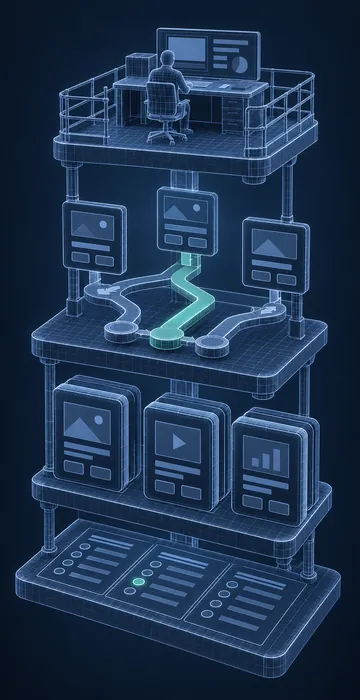
The key is clarity, so tell learners which assessments allow AI help, which don't and why. Many organizations use three simple levels:
- No AI: closed-book knowledge checks for safety-critical or certification content, ideally supervised.
- AI for support: learners may use approved tools to research or brainstorm, but the work must be their own.
- AI as part of the task: learners are expected to use AI and are assessed on the quality of the final result.
Writing these levels into your training policy removes guesswork and makes the rules fair. Most people follow rules they understand.
How Do You Audit the Assessments You Already Have?
Audit your current assessments by testing them against a chatbot yourself, then sorting them by risk. It's a quick, eye-opening exercise, and it tells you exactly where to spend redesign time.
- List every graded assessment in your catalog and note what each score is used for: nothing, a completion record, a compliance requirement or a certification.
- Paste a sample of questions from each into an approved AI tool, such as your company's business account. Record how many it answers correctly.
- Rank each assessment by two factors: how easily AI answered it and how much the score matters.
- Redesign the high-stakes, high-exposure assessments first. Leave low-stakes knowledge checks alone for now. They still help learners practice.
- Repeat the test once a year, because AI tools keep getting more capable.
Here's a simple example of the math. Say you have 40 graded assessments, and the test shows AI answers most questions correctly on 28 of them, but only 6 of those 28 feed a certification or compliance record. Those 6 are your redesign list, while the rest can wait, and you've turned a vague worry into a defined project.
Bring a subject matter expert into the review. They'll quickly see which questions test real job judgment and which ones only test whether someone read the slide.
What About High-Stakes Certification?
For high-stakes certification, use layers. Combine a supervised or proctored knowledge exam with a practical skill demonstration. If someone's license, safety role or pay depends on the result, the assessment should be worth that weight.
Practical demonstrations are especially strong here. A technician who completes the procedure on real or simulated equipment while an assessor watches has proven something no quiz score can match. It costs more to run, so save it for the skills where an error really matters.
Turn the AI Cheating Worry Into Better Assessments
So, can learners cheat with AI? On recall quizzes, easily, but on well-designed assessments that ask them to apply knowledge, perform tasks and explain their thinking, much less so. The real fix for AI cheating on assessments is to measure doing instead of knowing, set clear rules for when AI help is allowed, and skip unreliable detectors.
Then measure what happens after the course, too, because assessment scores are only one signal. Our guide to AI training evaluation shows how AI can help connect training to on-the-job results, which is the integrity check that matters most.